
Preventing Corrosion in Stainless Steel Hot Tub Jets
Did you know stainless steel is NOT rustproof? Stainless steel is actually rust resistant, thanks to a chemical element reaction formally known as chromium.

chromium (oxide (Cr₂O₃) layer) is a inorganic compound that forms naturally when stainless steel is exposed to oxygen. This passive layer acts as a shield against corrosion, preventing rust and degradation.
The Inorganic Nature and Function of Chromium Oxide
Chromium oxide is a stable, non-reactive compound that forms on stainless steel surfaces containing at least 10.5% chromium. When stainless steel is exposed to oxygen, chromium within the metal reacts to create a thin, passive oxide layer that prevents further oxidation. This process, known as passivation, differentiates stainless steel from ordinary steel, which lacks this protective barrier and is more prone to rusting.
For the chromium oxide layer to function properly, it must remain intact and continuously exposed to oxygen. If the layer is disrupted—by excessive chlorine, abrasive cleaning, or iron contamination—the stainless steel loses its resistance to corrosion. This directly impacts the waterfall, fountain, or shoulder jets that are above water.
Unlike other protective coatings, chromium oxide is self-healing, meaning that if the surface is scratched or damaged, it can reform when exposed to oxygen and moisture. However, factors like iron contamination, unbalanced water chemistry, and harsh chemicals can disrupt this layer, leaving the steel vulnerable to corrosion.
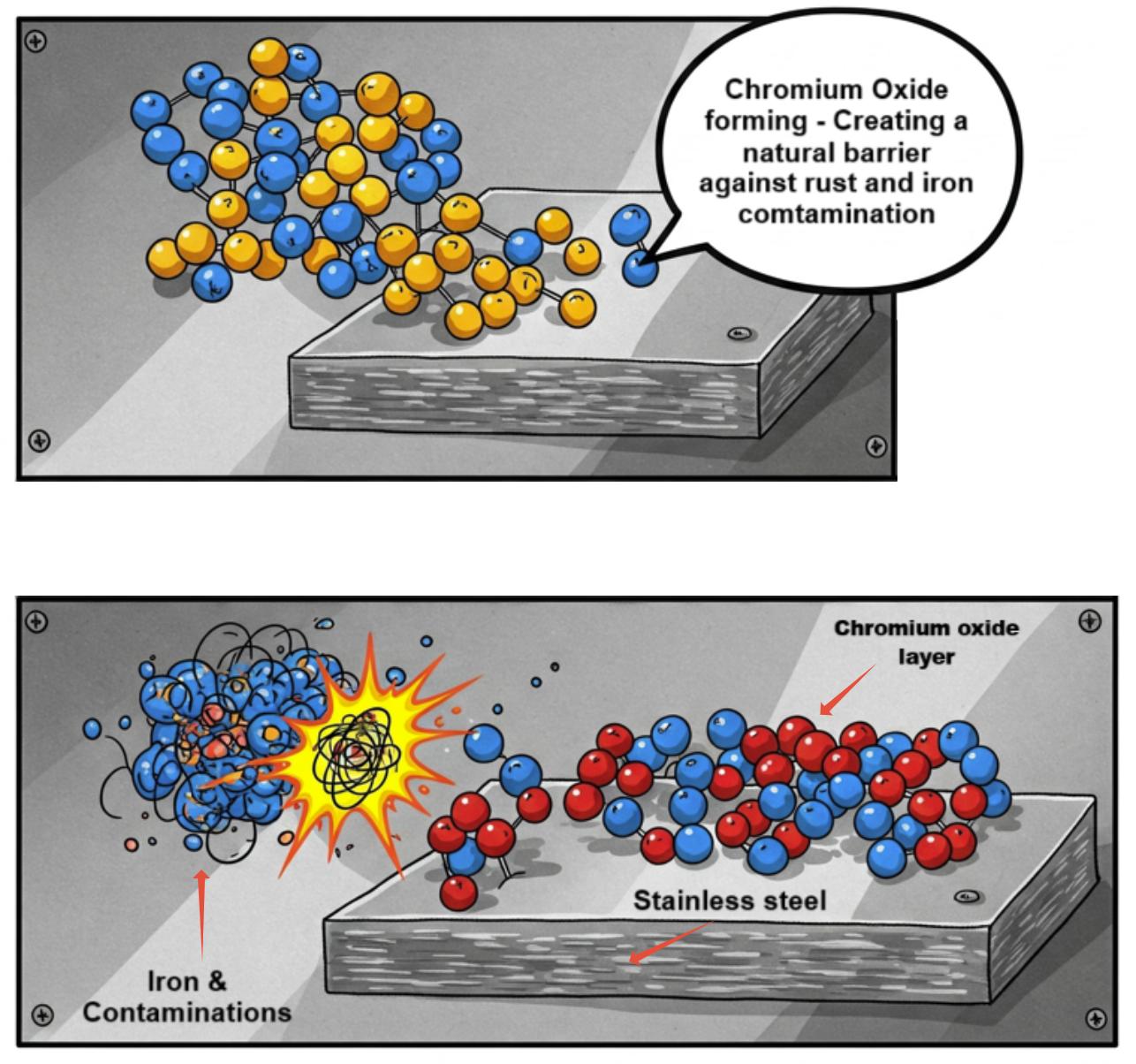
- Iron Formation in Hot Tubs versus. Rust: Iron formation in a hot tub and rusting are two distinct processes, though both involve iron interacting with surrounding substances.
In this case, Iron can enter or be found in hot tubs through the water source originally poured/filled with, particularly in mineral-rich or hard water (water hardness).
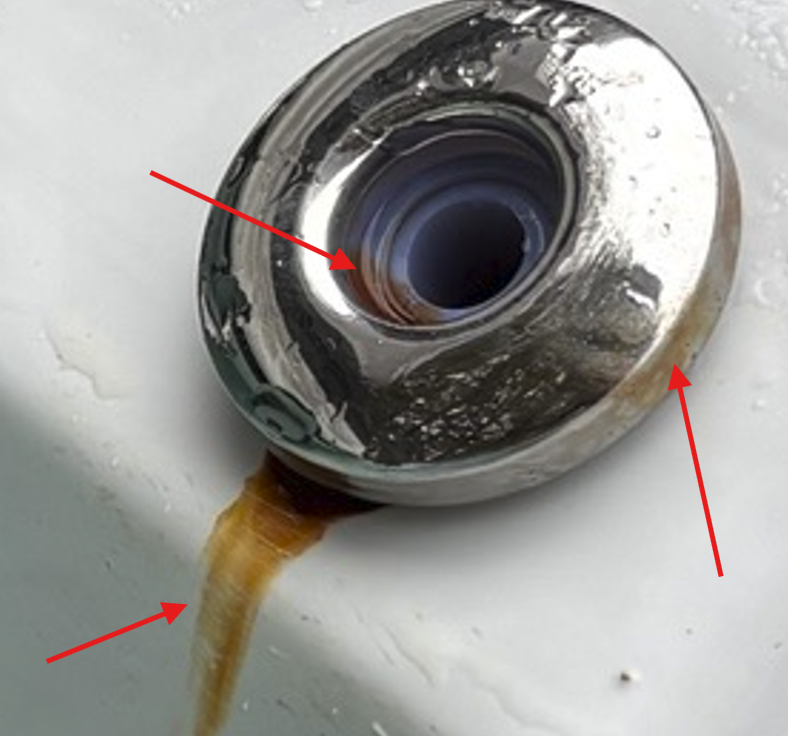
When water is heated, iron solubility changes, and excess iron may precipitate out, forming solid particles. These particles appear as reddish-brown or yellowish mineral deposits on tub surfaces. This is not rust but rather mineral buildup that can stain surfaces and accumulate over time.
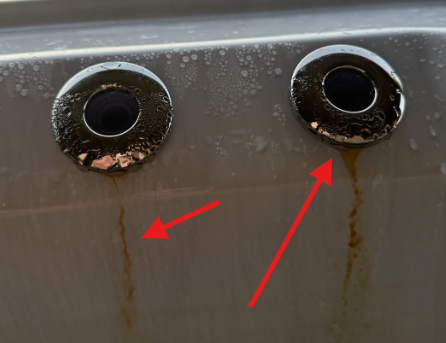
Rust Formation: Rust occurs when iron reacts with oxygen in the presence of water, forming iron oxide (Fe₂O₃), a brittle, reddish-brown substance that deteriorates metal over time.
- Key Differences: While iron buildup in a hot tub is a physical precipitation process, rusting is a chemical oxidation reaction.
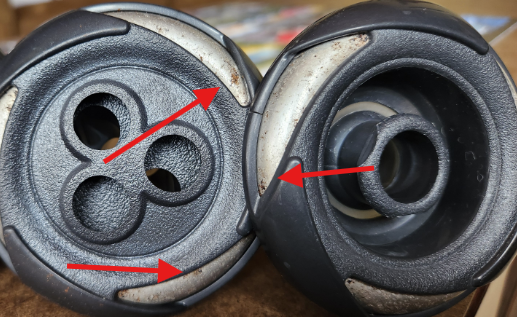
- Iron deposits do not corrode metal at first but can cause staining. This staining can then lead or allow rust to form due to lack of chromium oxide barrier, leading rust formation to actively breaks down metal surfaces, making it far more destructive.
Protecting the Chromium Oxide Layer
To maintain the chromium oxide layer, water chemistry must remain stable. The pH should be between 7.2 and 7.8, chlorine levels should stay between 1-5 ppm, and alkalinity should be maintained at 80-120 ppm. Excess chlorine can erode the protective layer, making the metal susceptible to corrosion. Running jets regularly helps maintain oxygen exposure, supporting the self-healing properties of chromium oxide.
Maintaining balanced water chemistry, preventing iron contamination, and protecting the chromium oxide layer, stainless steel hot tub jets can remain durable and corrosion-resistant for years, as this also has a ripple effect on other materials, such as cover vinyl, components in your spa
For more insight check out our article here: Spa start-up & Chemical FAQ